
| No Hibernating Allowed |
|
| Written by Will Balk, Jr. |
| Tuesday, 16 December 2014 14:09 |
|
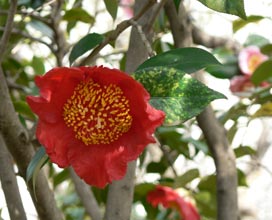
All of us can celebrate interesting new introductions of hardy plants which add to our glorious palette of existing winter beauties. The queen of the winter garden in the South is, of course, the Camellia. Yes, yes, I know: people are pronouncing it “ca-MEE-lee-a” all the time. I have always pronounced it the way generations of my family have pronounced it, “ca-MELL-ee-a”. Since the Latin name was given to the plant by Linnaeus in honor of the Jesuit botanist Georg Joseph Kamel (whose last name is pronounced “ca-mell”), I contend my chosen pronunciation is the traditional one. But – no matter! Cameelia or camellia, this magnificent flowering shrub or small tree can be relied on to provide spectacular blooms from September to May, depending on species and variety. There are the traditional Camellia japonicas, with large waxy flowers in reds, pinks, and whites – often striped or spotted. The formal double ones are perhaps best known, like ‘Pink Perfection’; but some of the more exotic ones produce a massive central boss of golden stamens against a background of flattened single petals (the higo types), or a pink or red flower with a contrasting white edge (picotee). These japonicas usually bloom here starting in October or November – ‘Debutante’ often is the first of ours to bloom. Then other varieties come into bloom throughout the winter and into spring. Always a magnificent show. Another species of camellia, C. sasanqua, and still other similar hybrids, start blooming even earlier. ‘Bonanza’ and ‘Kanjiro’ are usually the first of our sasanquas to bloom, often starting in September. As winter comes, the sasanquas join the japonicas for a truly bold garden statement. Although each bloom on the japonicas will usually last several days, the sasanqua blooms only last for a day or so, but they are replaced with even more blooms as soon as the first ones fall.
Speaking of shrubs for our area, see if you can find a nursery carrying Stachyurus praecox. It is supposedly known as “spiketail”, but I have never heard anyone call it that…only heard it called “stacky-you’re-us”. Many years ago I spotted one on a television program, made note of the name, and I went to the only nursery that said they had it. I bought it, brought it home, and waited for years for it to bloom…only to realize it was most definitely NOT Stachyurus. Eventually, I did go back and acquire one which had just started to bloom – exactly what I was hoping for.
I know everyone, newby and old-timer alike, loves the vivid colors that pansies, violas, and snapdragons bring to our winter landscape. Treated as annuals, they are perfect for filling in bare spots left when our warm weather plants have gone dormant for the season. Much of the country must use these annuals for springtime bloom and later, but here they are ideal for winter show. Winter for us is also the time our narcissus show their stuff. The bulbs all over the yard at our inland homestead have been popping up every October or November for a century, blooming yellow and cream and white wherever they have settled on their own. It seems they survived decades of mowing, digging, driving-over, and careless attentions by moving on their own to more undisturbed spots. We certainly never dug them and moved them.
And speaking of roses (obviously, despite their common name, Hellebores are NOT roses at all), there are some true roses – Rosa sp. – which give us bloom during warm spells in the winter. There is one in my garden, the old-timey China rose called Cramoisi Superieur, which will bloom nearly all year. I don’t mean it is “everblooming”; I’m too lazy to keep it trimmed and cleaned, so it blooms its head off with sumptuous many-petaled red blooms, then quits for a little while, then blooms, then quits . . . all year long. It is such a fully-double old-fashioned flower, I broke my vow never to bother with roses. There are other china roses which will behave similarly in our climate, giving year-round joy to the gardener. *binyah: been here; long time resident; native |
 Newcomers to the Lowcountry are sometimes astounded at the beauty to be found in our gardens and woodlands in the depth of winter. We binyahs* sometimes forget just how lucky we are to have such a rich variety of winter-flowering garden plants at our disposal for use in the garden.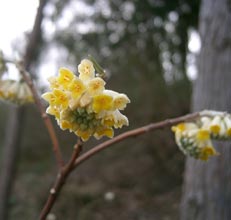

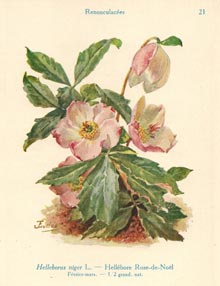 Hellebores – Christmas Rose, Lenten Rose – are often sold as bulbous plants. There has been amazing work done in recent years, developing a huge range of colors and flower forms of Hellebore, many available from nurseries and many suitable for our climate. These make lovely bouquets as well as performing in the garden, and the new types now available deserve some attention from Lowcountry gardeners.