
| A Kind of Dance: Part Two |
|
| Written by Mark Shaffer |
| Tuesday, 10 September 2013 11:00 |
|
A conversation with award winning Beaufort writer Teresa (Read Part One.)
In1989 Teresa Bruce moved to Beaufort fresh out of grad school to take a reporting job at WJWJ TV. Among her first assignments was a story on Byrne and Duncan Miller. Soon after, everything changed. The Millers were exotic creatures. Byrne worked burlesque during the Great Depression. She'd been at the vanguard of the Modern Dance movement, owned studios and worked as a choreographer before moving to the Lowcountry to found a dance theater and enlighten the local educational system. Duncan was an original Mad Man of Madison Avenue – a gifted and troubled individual whose great, unfulfilled ambition was to be known as a novelist. Wherever the Millers had lived and worked Byrne "collected" children. She simply adopted people of all sorts into a huge, extended family. Teresa was among the last to join this vast collection of "brothers and sisters by Byrne." Their memories were a crucial part of this "rememoir" of their shared Other Mother. It will be available locally this month and nationwide on November 5th.
Teresa Bruce: Yes, a couple. One of my "Sisters by Byrne" said, "Don't be surprised if not everyone has the same warm, fuzzy memories you do." She likened it to when here own mother died and the recollections of her sisters were so different it was as if they were all talking about a different person. She opened my eyes to that. Not everyone was going to have the same feelings about Byrne. The main revelation came from one of her first "adopted" children, my Navajo "Brother by Byrne." I realized by talking to him that she wasn't very good at it when she first started "collecting" children. She really didn't know when to back off and when to let their personalities grow. She was a bit of a bulldozer. She knew he could be a world-class dancer and she was going to make him have that opportunity. She was also culturally insensitive in a way. She didn't realize what a tempest she'd stirred up in his life. They worked it all out and he did become a dancer and eventually a teacher and he considers her as influential as I do. But it was interesting to see that when she started out being "The Other Mother" she wasn't exactly perfect at it. I was at the tail end of her "other mothering." She had it down to a science by then. She knew not to critique my decisions or give me direct advice. She just tossed her "womenisms" in the air like confetti and stepped aside and let them come down as they may. Half of what I learned from her were things that years later I realized, oh, that's what she meant. MS: The book is subtitled "a rememoir." That's new. TB: It's a word we invented. And it was kind of a risk. Any time you invent a word it can backfire. But it really felt like it described this book better than "a memoir" because it's the truth as I remember it. Her story starts fifty years before I was born so I'm telling the story of a relationship that defines me, but to do that I really needed to be inside her head and I wasn't there. So I told it So, it's a remembered truth that's pulled together through all kinds of different sources and why we decided to call it a "rememoir." MS: As a screenwriter you pay a lot of attention to dialogue and there's a lot of dialogue in the book. Do you remember these conversations verbatim? TB: I was really struggling with that. She had a journal so some of it was written. But even when you write something in a journal it's not written the way you'd speak it. I was struggling with this because I didn't want it to be like a biography. I knew the dialogue was going to be critical because she was such a talker. I mean, you couldn't get a word in edgewise. MS: As well as you knew Byrne there was still had a ton of research involved.
The challenge was what not to include. For instance, I didn't do so much with her teaching career as I could have. She was so influential in Beaufort County's public schools, not just as the person who introduced modern dance – which she did. She started by teaching movement therapy to hearing impaired and handicapped kids. It was revolutionary. People in the system today still talk about what a complete breath of fresh air Byrne was. She just made it happen. I went to some of the places that were important to her: Greenwich Village and the house where she MS: Putting yourself in the time and place. TB: Right. It was important to be able to describe it and make you feel like you're there. MS: On the subject of place and time, you wrote the book in her house. TB: Yeah! MS: We're sitting and talking in that house, which is your house now. TB: It is. It's perfect karma, right? This house was always a center for creativity and the arts. It was a natural place to write the book. One of the reasons I moved back here was to begin a writing career and I just knew it had to be here. Beaufort's a real character in the book, too. MS: She had a definite influence on Beaufort. What sort of influence did Beaufort have on her? TB: That's really interesting. I never really thought about that. I think it was a big influence on her in the sense that it's where she really had her "ah ha!" moment of realizing that movement and thought are connected. Beaufort was the place that inspired her to connect all the dots of her life and bring dance as movement therapy to kids who couldn't express themselves or balance or concentrate. I think Beaufort influenced her in that sense. It was a place where she could think and gain perspective and bring it all together.
MS: In the end, when you actually sat down and said, "I'm going to do this" what was the final motivation? TB: Byrne said to me at one point that her only regret was never getting Duncan published. That was a revelation. I had no idea. She told me from the beginning he was a novelist, he'd written six books. I assumed he was known because of how she spoke of him. The book has a lot to do with why she portrayed him in that light. Through the research I found out that he really battled mental illness and that's a big part of the book and an important topic to me. But when she said that was her only regret it just hit me. On of the main reasons I did the book was to help right that. MS: There's a lot of karma at work here. Do you ever get the sense that Byrne's around? TB: Yes. Yes I do. I get the sense that she's very amused. Book Launch Celebration & Workshop Join Teresa Bruce and friends of Byrne Miller at the USCB Center for the Arts to celebrate the publication of The Other Mother: a rememoir on Saturday, Sept. 21st at 6 pm. There will be a short program, followed by a catered reception and book signing. The author will do an encore presentation of her TED talk about Byrne Miller, advanced dance students will perform short pieces, and Gail Westerfield will perform a monologue written for Byrne by Suzanne Larson. The event is free and a portion of book sales will go to the USCB Center for the Arts renovation fund. Joggling Board Press publisher Susan Kamerraad-Campbell and Bruce will conduct a writing workshop the following day, Sunday, Sept. 22nd, from 1-3 pm called, "Tap into your creative mind: Telling your story one pearl at a time." To register, call 521-4145. Read our review of "The Other Mother: a rememoir. GET MORE: |
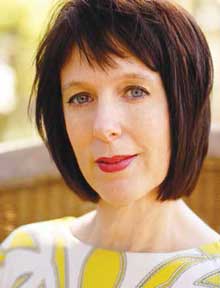
 Bruce about her upcoming book, "The Other Mother," and the transformative power of chance encounters.
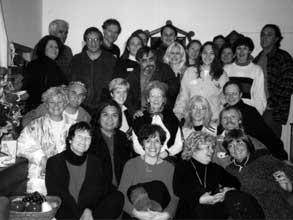 Mark Shaffer: Part of the research for the book involved interviewing your brothers and sisters by Byrne. Were there any revelations?
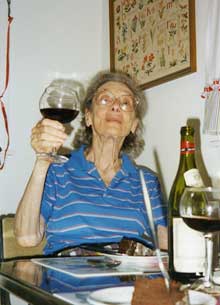 through all of the stories she told me. I had months and months of sitting on the porch listening to her tell the stories of her life, which I sucked in like a sponge. And I had all of the same stories verified in different ways by all of my collected brothers and sisters. I had journals and lots of newspaper articles because once she moved here the press couldn't get enough of her, she was such a fabulous interview.
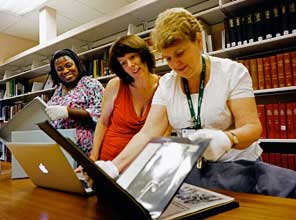 TB: The Library was the ace in the hole. The Beaufort County Library has a thing called The Special Collections, sometimes called The District Collection. When she died all of her material – thirty years of dance theater programs, brochures, contracts, her journal, all of her correspondence, a wealth of information – was all donated. It's all there. Grace Cordial runs that collection and we plowed through it.
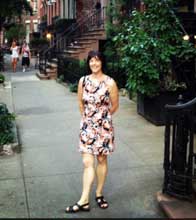 first lived with Duncan, their place in Santa Fe. I went to those places and walked around and imagined and researched other things that had been written at the time she was there.
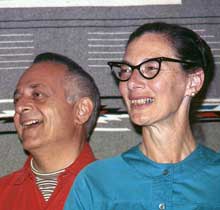 I think the physical location was more crucial for Duncan than Byrne. He always wanted to be near water. He was born in Charleston. For a while they lived in Santa Fe – that was where she came into her own as a dancer and choreographer. She probably would've stayed there forever. It was the era of Georgia O'Keefe and that was the place to be. But Duncan missed the water. And Duncan was having trouble. So they came back here and Duncan sat on that porch to look at the water and he told Byrne that the water helped him find his words. He was in the early stages of Alzheimer's and his words were going. He was a life long writer and he needed the water and the serenity and the regularity of the tides to focus and ground him so the words would come back. That's also why it was important to her. It gave him peace.